
What a chimney cap does
The cap sits directly over the flue. It blocks rainwater from pouring down the flue, keeps birds, squirrels and raccoons out, stops leaves and debris from blocking the draft, and — with a spark screen — keeps embers from landing on the roof.
Caps are inexpensive and one of the highest-value parts on the entire chimney. A missing cap lets water fall straight onto the damper and smoke shelf, where it rusts metal and soaks masonry from the inside.
What a chase cover does
Many newer homes have a framed chimney chase clad in siding or stucco rather than solid masonry. The chase cover is the metal lid across the top of that box. Water that gets past it runs inside the framing, where it rots wood and stains ceilings long before anyone sees it on the roof.
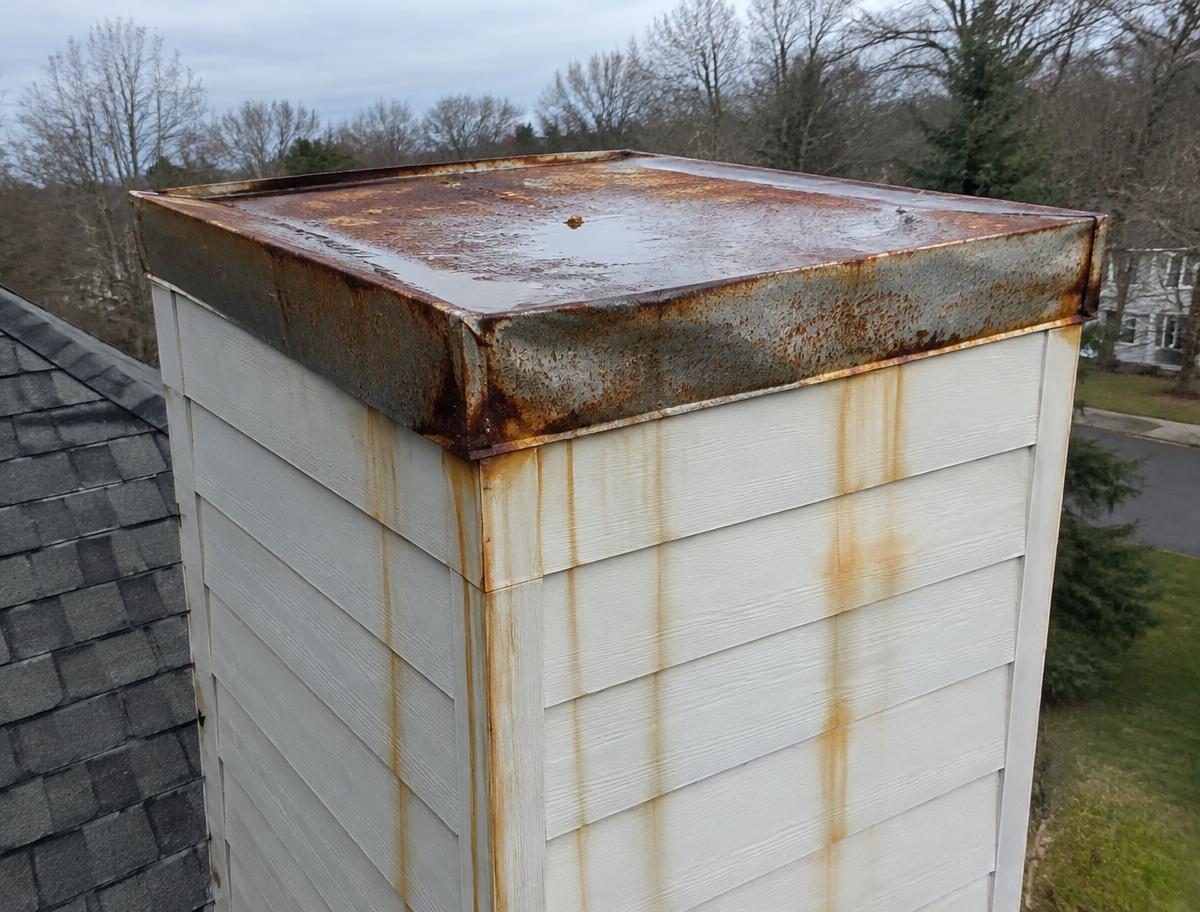
Chase covers are commonly built from galvanized steel, which rusts. A rusted cover with standing water in the middle is one of the most frequent leak sources we find in the San Antonio metro.
- Rust stains streaking down the siding or stucco
- Water pooling in the middle of the cover instead of draining
- Seams opening at the corners or around the flue collar
- Ceiling or attic stains near the chimney after rain
Which one your chimney needs
If the chimney is solid brick or stone, it has a concrete crown and needs a properly sized cap over the flue. If the chimney is a framed box clad in siding or stucco, it needs both a chase cover sized to the chase and a cap on the flue.
Sizing matters. An off-the-shelf cover that does not match the chase will pond water at the edges and fail again within a few seasons.
Materials worth paying for
Stainless steel costs more than galvanized and lasts far longer in Texas weather. A stainless chase cover with a proper cross-break (a slight peak so water sheds) and correctly formed edges is the difference between a part you replace once and a part you replace every few years.