
What counts as a repair
Repair work means the existing chimney structure is sound and only specific components have failed. In San Antonio that most often means mortar joints opened by heat and rain cycles, a cracked crown, a rusted chase cover, lifted flashing at the roofline, or a handful of deteriorated bricks near the top.
Repairs are the far cheaper path, and catching problems at this stage is the single biggest thing a homeowner can do to avoid a five-figure masonry project later.
- Open or crumbling mortar joints in a limited area
- A cracked or undersized crown letting water into the brick
- Failed flashing, a missing cap or a rusted chase cover
- A few spalled bricks that can be cut out and replaced
When a partial rebuild is the right call
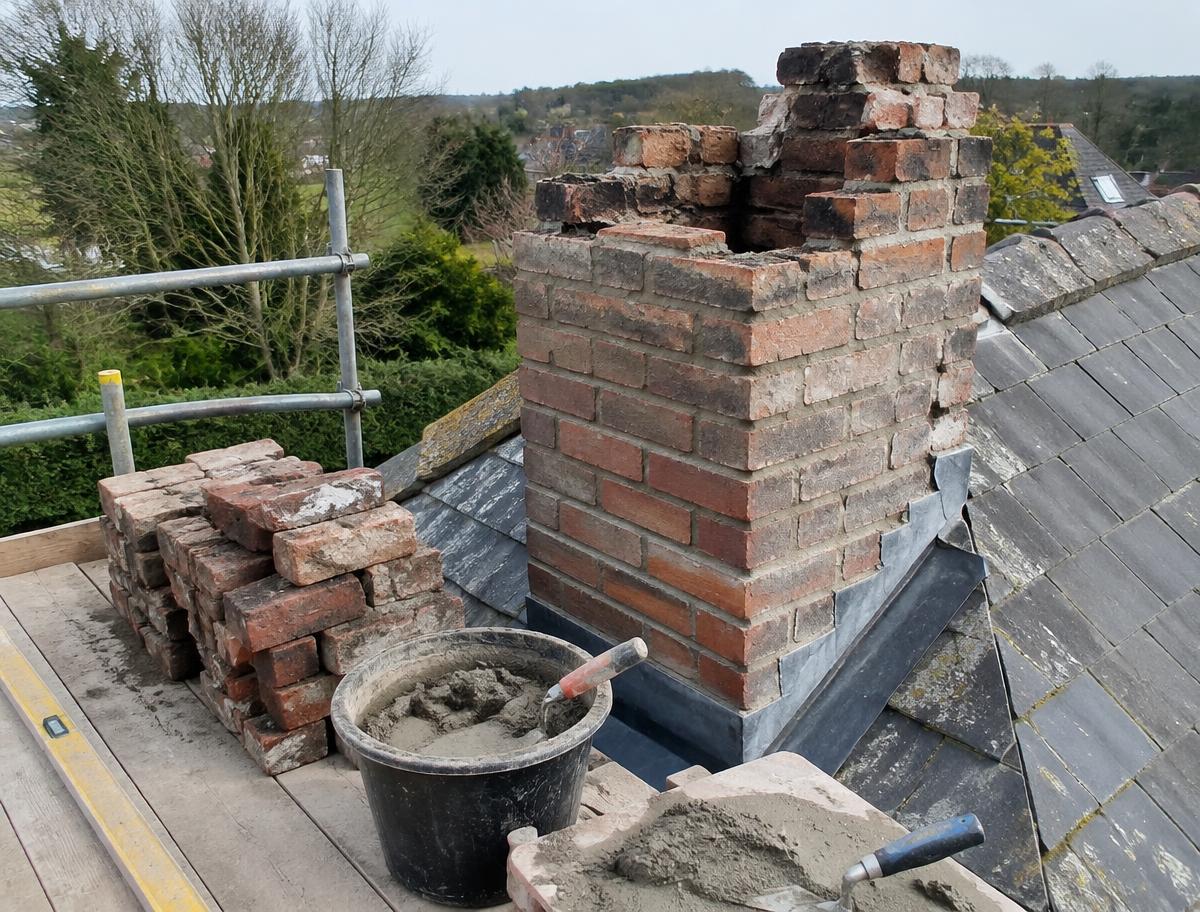
A partial rebuild takes the chimney down to a sound course of brick — usually at or just below the roofline — and rebuilds up from there with a new crown and cap. It is the most common rebuild we perform in the San Antonio area because the section above the roof takes the most sun, wind and rain.
If the damage stops at the roofline, there is no reason to pay for a full tear-down.
When a full rebuild is the only safe answer
A full rebuild is warranted when the structure itself has lost integrity: a visible lean, widespread spalling down the stack, mortar that can be scraped out by hand at multiple levels, or a chimney that has already been patched repeatedly without holding.
At that point, patching costs money that never comes back. A rebuilt chimney with a properly poured crown and correct flashing resets the clock on the whole system.
How the decision gets made on site
A trustworthy answer comes from getting on the roof, sounding the masonry, checking the crown and flue, and looking at how water has been travelling through the structure. Photos from the ground cannot show mortar depth or a hairline crown crack.
Chimney Operations inspects first and then shows you what was found, so the repair-or-rebuild decision is yours and based on evidence.