
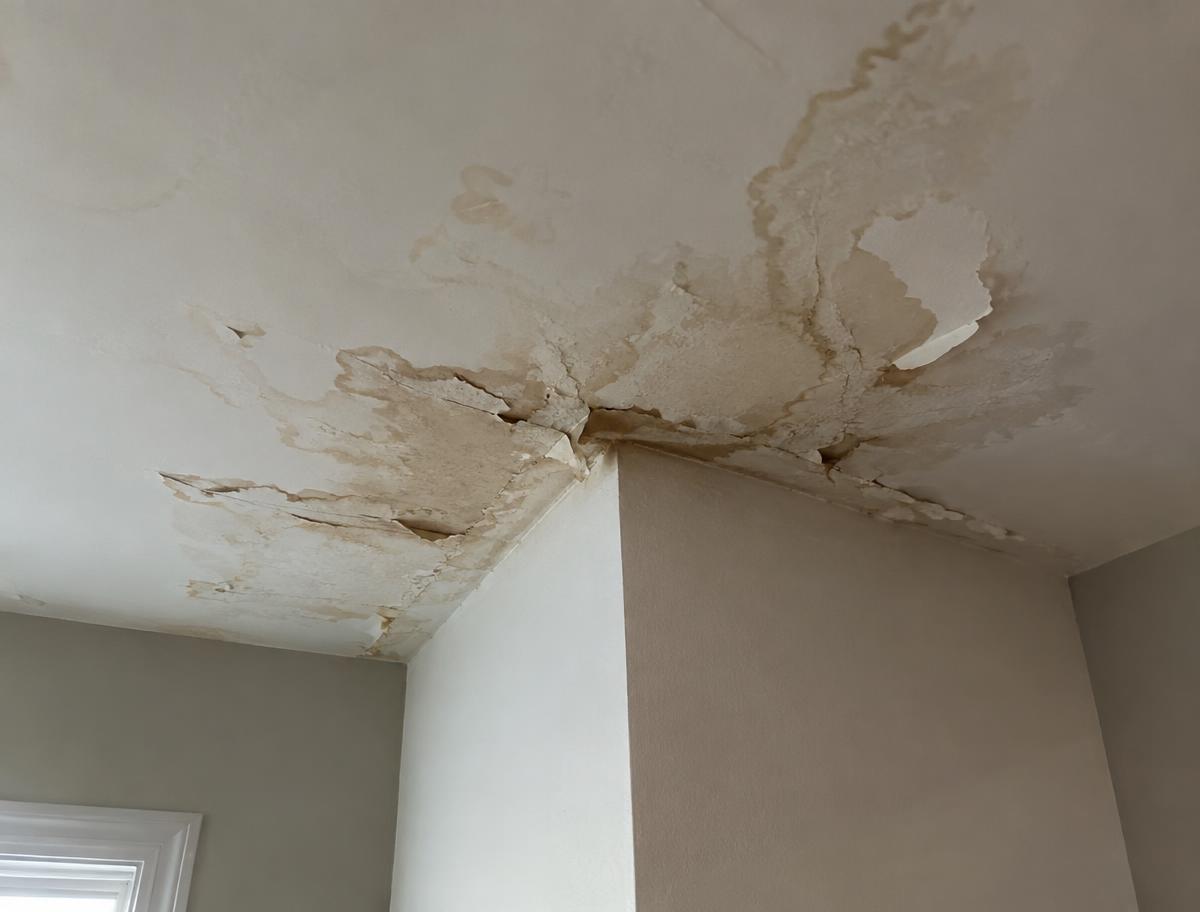
Start at the top: the crown and the cap
The crown is the concrete slab across the top of a masonry chimney, and it is the first thing that fails in Texas heat. Hairline cracks open wider every summer, and every rain pushes water straight down into the brick.
A missing or rusted cap does the same job in reverse — rain drops directly down the open flue, soaking the smoke chamber and the firebox below.
- Cracked or chipped crown edges
- Rust streaks running down the brick
- A damp smell inside the firebox after rain
Flashing: the number one leak we find
Flashing is the metal that seals the joint between the chimney and the roof. When it lifts, rusts through, or was originally sealed with roofing tar instead of proper step and counter flashing, water runs behind it into the attic.
A tar patch is a warning sign, not a repair. It buys a season and then cracks in the sun.
Porous brick and open mortar joints
Brick absorbs water like a sponge. In older San Antonio chimneys the mortar joints have washed out enough that wind-driven rain simply passes through the wall. A breathable waterproofing treatment, applied after any joint repair, stops absorption without trapping moisture inside.
How the source gets confirmed
Guessing is expensive. We check the crown, cap, flashing, chase cover and masonry in one visit, photograph what was found, and then quote only the repair that stops the water.