
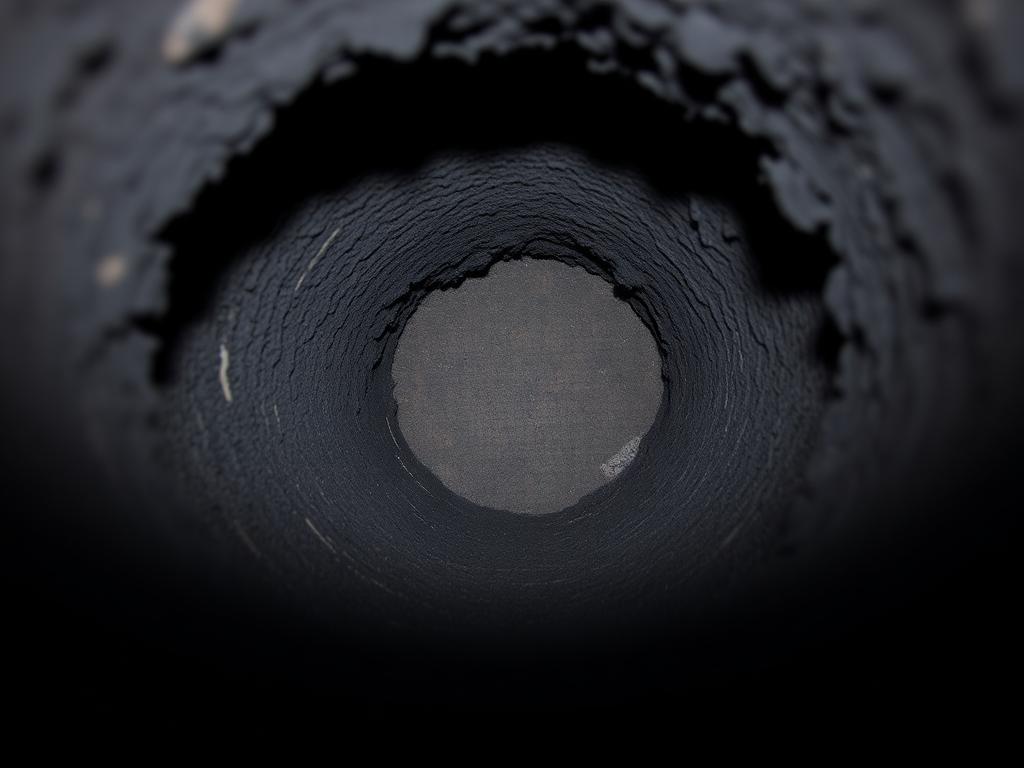
How creosote forms
Burning wood releases smoke, unburned gas and moisture. When that mixture hits a flue surface cooler than the smoke, it condenses and sticks. Slow, smoldering fires, unseasoned wood, a closed-down air supply and an oversized or exterior flue all make it worse.
Every fire adds a layer. Nothing removes it except mechanical sweeping.
The three stages
Stage 1 is a light, dusty soot that brushes off easily. Stage 2 is hard, shiny black flakes that need rotary tools. Stage 3 is a thick, glazed, tar-like coating that has hardened to the flue wall and burns like fuel.
Most homeowners who have gone several seasons without a sweep are somewhere in stage 2. Stage 3 usually means years of slow burning with poor draft.
- Stage 1 — soft soot, removed by a routine sweep
- Stage 2 — hard flakes, needs rotary brushing
- Stage 3 — glazed tar, needs specialist removal or relining
- Any stage combined with a blockage is an immediate safety issue
Warning signs between sweeps
You do not need to see inside the flue to spot a problem. Smoke pushing back into the room, a strong campfire or tar smell on humid days, black flakes in the firebox, or a fire that will not draw all point to buildup or a blockage.
How to slow it down
Burn seasoned hardwood only, keep fires hot and well-aired rather than smoldering overnight, never burn treated wood or trash, and have the chimney swept and inspected once a year. A properly sized cap also keeps rain out of the flue, since moisture accelerates buildup and corrosion.