
By how you use the fireplace
Occasional wood fires on cold evenings: one sweep and inspection per year, best done before the first cold snap. Frequent wood burning through the winter: inspect mid-season and expect a second sweep. Wood stove inserts: annual minimum, more often with softwood or slow burning.
Gas logs and gas inserts: an annual inspection of the venting, connections and firebox — creosote is not the risk, blockage and corrosion are.
- Occasional wood fires — annual sweep and inspection
- Heavy winter use — inspect mid-season, often two sweeps
- Wood stove insert — annual minimum
- Gas fireplace — annual venting inspection
- Unused chimney — inspect before lighting the first fire
Signs you should not wait for the annual visit
Smoke entering the room, a strong tar or campfire smell, black flakes falling into the firebox, animals or nesting noise in the flue, water stains on the ceiling near the chimney, or a fire that struggles to draw — each of these is a reason to book now rather than at the end of the season.
Why sweep before you sell or after you buy
A chimney is one of the few systems a general home inspection barely touches. Before selling, a documented sweep and inspection removes a negotiating point. After buying, it tells you what the previous owner actually left you — we regularly find missing caps, cracked crowns and blocked flues in homes that just changed hands.
What a professional visit includes
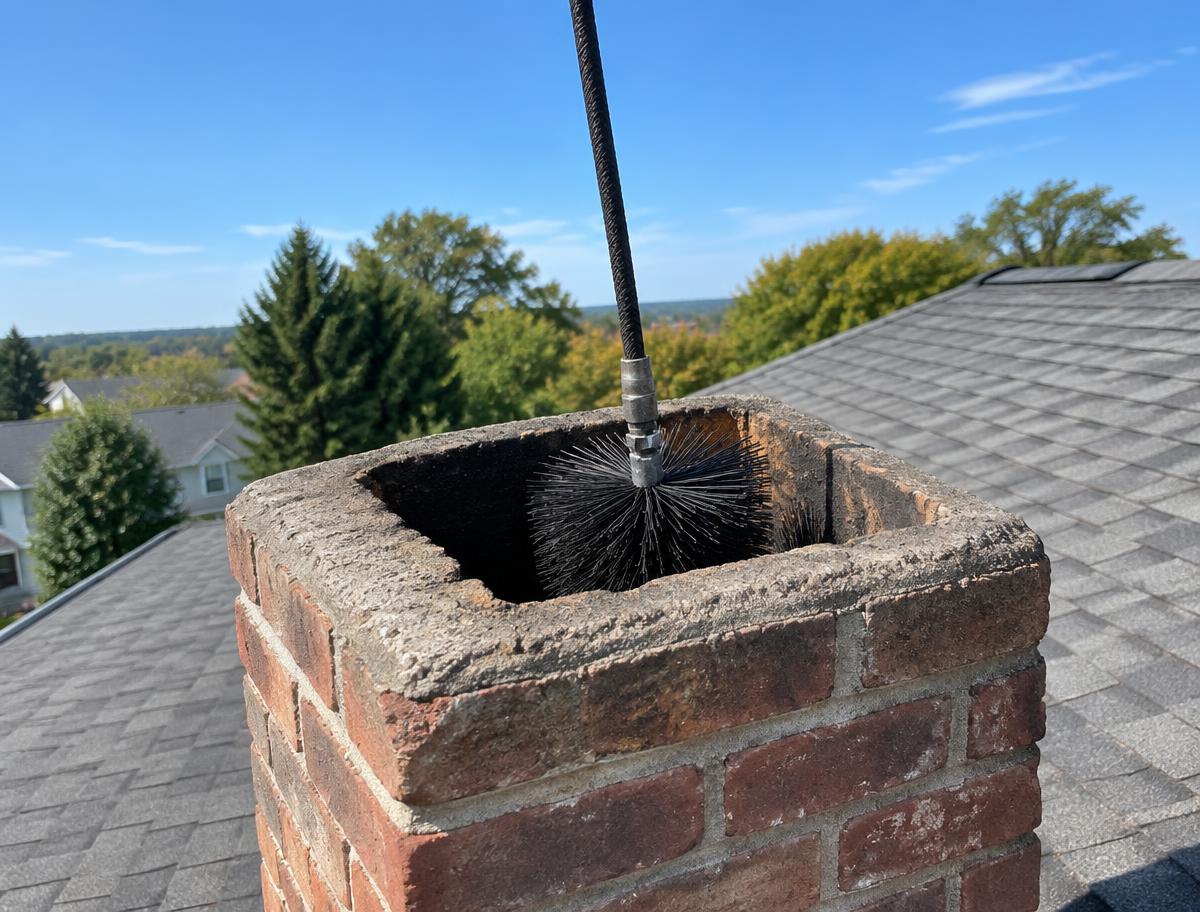
A full visit sweeps the flue, smoke chamber and firebox with containment in place, and checks the liner, damper, crown, cap, flashing and exterior masonry. You should finish the visit knowing the condition of the chimney and what — if anything — needs attention first.