
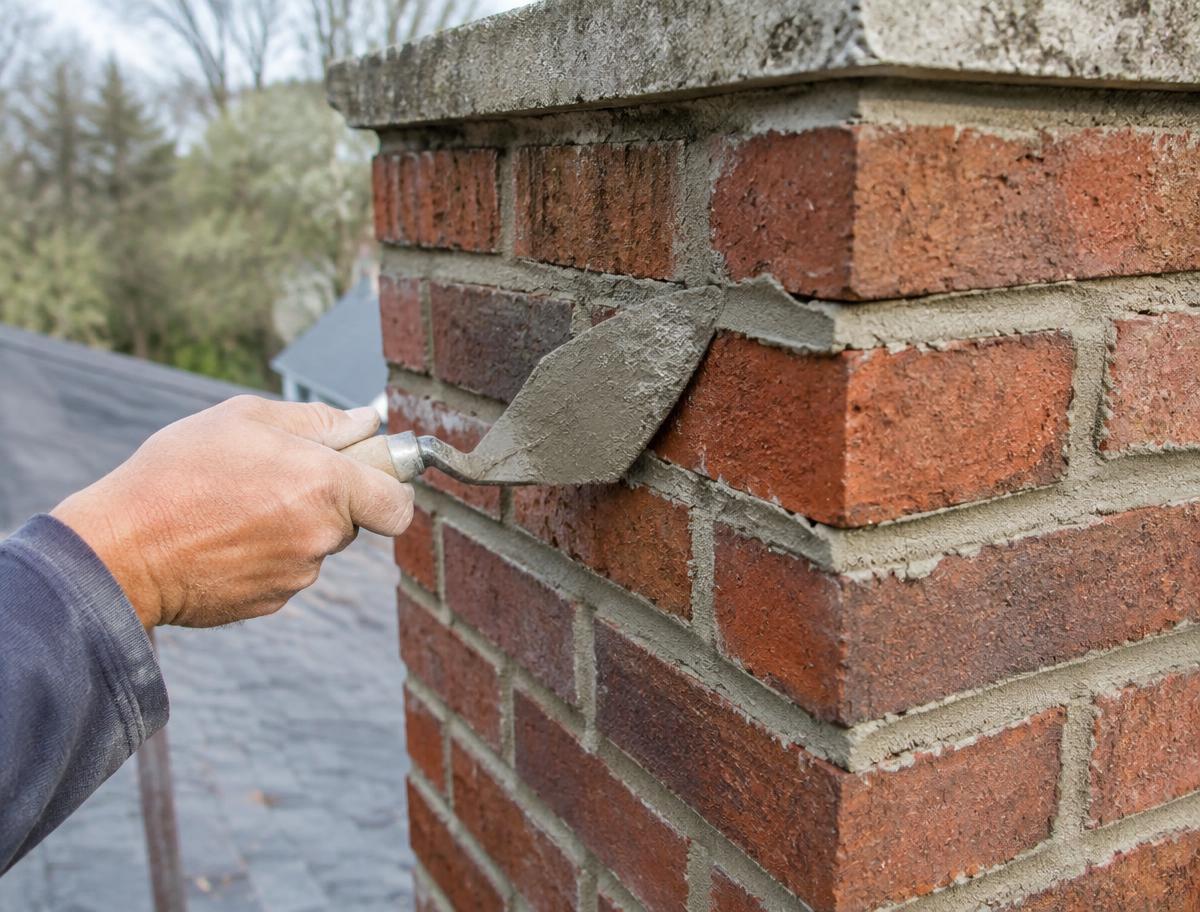
Repointing: the structural job
Mortar is designed to wear before the brick does. In San Antonio, heat cycling and driving rain open joints over the years, and once they are open, water goes straight into the chimney core.
Repointing removes the failed mortar to a consistent depth and replaces it with mortar matched to the original in strength and color. Depth matters: smearing new mortar over a failed joint hides the problem for one season and traps moisture behind it.
- Joints raked out to roughly twice their width in depth
- Mortar matched in strength — too hard a mix cracks the brick
- Joints packed in layers, then tooled to shed water
- Work done on sound brick; spalled brick is replaced first
Tuckpointing: the appearance technique
True tuckpointing fills the joint with mortar matched to the brick color, then inserts a thin line of contrasting mortar to give the illusion of very fine, precise joints. It is a decorative craft technique, historically used to make ordinary brickwork look like premium ashlar work.
It is rarely what a homeowner actually needs on a chimney — but it is the word most people search for, so most companies use it to mean mortar repair.
When mortar work is no longer enough
Pointing only works when the brick itself is sound. If the brick faces are flaking off (spalling), the stack is leaning, or mortar has washed out through the full depth at several levels, repointing will not restore the structure and a partial or full rebuild is the honest recommendation.
Why the mortar mix matters in Texas
Modern high-cement mortar is stronger than much of the older brick it gets packed against. When the wall moves, the brick loses. Matching mortar strength to the existing masonry is a detail that separates a repair lasting decades from one that damages the chimney.